
dpiit startup benefits

DPIIT Startup Registration Blacktie Legal Services Blacktie Legal Services India LLP Blacktie Legal Services India Blacktie Legal Consultancy Blacktie Legal Firm Blacktie Legal Solutions Blacktie Legal Experts
Blogs

DPIIT Startup Registration: 10 Powerful Benefits, Process & Mistakes

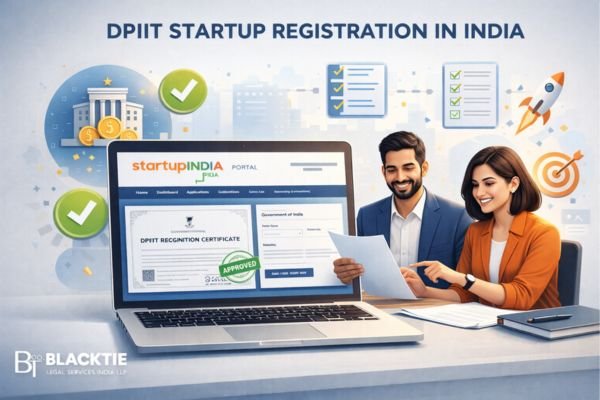
For Applying DPIIT Seed Fund Application Click Here… What is DPIIT Startup Registration? DPIIT startup registration is an official recognition provided by the Government of India to eligible startups under the Startup India initiative. DPIIT stands for the Department for Promotion of Industry and Internal Trade, which operates under the Ministry of Commerce and Industry. When a business completes DPIIT startup registration, it gets formally recognized as a “Startup” by the government. This recognition is not just a certificate—it opens the door to several benefits such as tax exemptions, easier compliance, government funding opportunities, and participation in startup-focused schemes. In simple terms, DPIIT startup registration helps new and innovative businesses get legal recognition and government support during their early growth stage. This registration is especially useful for startups that are working on innovation, product development, process improvement, or scalable business models. It applies to entities such as Private Limited Companies, Limited Liability Partnerships (LLPs), and Registered Partnership Firms. One important thing to understand is that DPIIT startup registration is completely online and is done through the Startup India portal. There is no government fee for registration, which makes it highly accessible for early-stage entrepreneurs. Once approved, the startup receives a DPIIT Recognition Certificate, which acts as proof of registration and is required to claim various benefits under the Startup India scheme. Overall, DPIIT startup registration is a smart and strategic step for founders who want to grow their business with government backing, reduce legal and tax burdens, and build credibility in the Indian startup ecosystem. Who Can Apply for DPIIT Startup Registration in India? DPIIT startup registration is available to entrepreneurs and businesses in India that meet certain government-defined conditions. Not every business can apply, but if your venture is new, innovative, and growth-oriented, you are likely eligible. First, the type of business entity matters. Only the following entities can apply for DPIIT startup registration: Sole proprietorships are not eligible for DPIIT startup registration, even if they are small or newly formed. Second, the age of the business is an important factor. A startup can apply if it is: If the business has crossed this time limit, it will not qualify for DPIIT startup registration, regardless of its size. Third, the turnover limit must be within the prescribed range. To be eligible: This condition ensures that DPIIT startup registration is focused on early and growing businesses rather than large, established companies. Another key requirement is innovation and scalability. The business should be: Traditional businesses with no innovation element may face difficulty in getting DPIIT startup registration approval. Additionally, the startup should be originally formed and not created by splitting up or reconstructing an existing business. The government allows DPIIT startup registration only for genuinely new ventures. In simple words, if you are an entrepreneur running a young, innovative business registered in India and aiming for growth, you can apply for DPIIT startup registration and take advantage of government-backed startup benefits. Benefits of DPIIT Startup Registration for Startups DPIIT startup registration offers multiple advantages that help startups grow faster while reducing financial and legal pressure during their early stages. These benefits are specifically designed to support innovation-driven businesses in India. 1. Income Tax Exemption One of the biggest benefits of DPIIT startup registration is income tax exemption for up to 3 consecutive financial years. Eligible startups can apply for tax relief under Section 80-IAC, which helps save money and reinvest profits into business growth. 2. Exemption from Angel Tax Startups with DPIIT startup registration can claim exemption from angel tax under Section 56(2)(viib). This means investments received from investors are not taxed as income, making it easier to raise funds without unnecessary tax burden. 3. Easy Access to Government Schemes & Funding DPIIT-recognized startups get priority access to: This financial support becomes crucial for early-stage startups looking to scale operations. 4. Faster Patent, Trademark & IP Registration Another major benefit of DPIIT startup registration is fast-track Intellectual Property (IP) services. Startups get: This helps startups protect their innovations at a much lower cost. 5. Self-Certification & Compliance Relaxation With DPIIT startup registration, startups can self-certify compliance under certain labor and environmental laws. This reduces inspections, paperwork, and legal hassles, allowing founders to focus on business growth. 6. Improved Business Credibility DPIIT recognition increases trust and credibility among investors, banks, customers, and government authorities. A DPIIT startup registration certificate acts as official proof that your business is recognized under the Startup India initiative. 7. Easier Participation in Government Tenders DPIIT-registered startups are exempted from: This opens new opportunities to work with government departments and PSUs. 8. Support in Winding Up In case a startup fails, DPIIT startup registration allows faster and easier exit under the Insolvency and Bankruptcy Code. This reduces risk and stress for entrepreneurs. Final Thoughts Overall, DPIIT startup registration is a powerful tool for startups that want financial benefits, legal relief, government support, and long-term growth opportunities. It helps founders build strong foundations while minimizing compliance and tax-related challenges. Eligibility Criteria for DPIIT Startup Registration To apply for DPIIT startup registration, a business must meet certain eligibility conditions set by the Government of India. These criteria ensure that only genuine and growth-oriented startups receive recognition and benefits under the Startup India initiative. 1. Type of Business Entity The startup must be registered in India as one of the following: Sole proprietorships and unregistered businesses are not eligible for DPIIT startup registration. 2. Age of the Startup For DPIIT startup registration, the business should be: If the startup exceeds this age limit, it will no longer qualify for DPIIT recognition. 3. Annual Turnover Limit The startup must satisfy the turnover condition: This rule ensures that DPIIT startup registration is limited to early and growing businesses. 4. Innovation & Scalability Requirement One of the most important eligibility conditions for DPIIT startup registration is innovation. The startup should: Businesses that are purely traditional or lack innovation may not be approved. 5. Original Business Formation The startup must be a new and
MSME-vs-startup-DPIIT
Blogs

MSME vs Startup DPIIT – A Complete Guide 2025

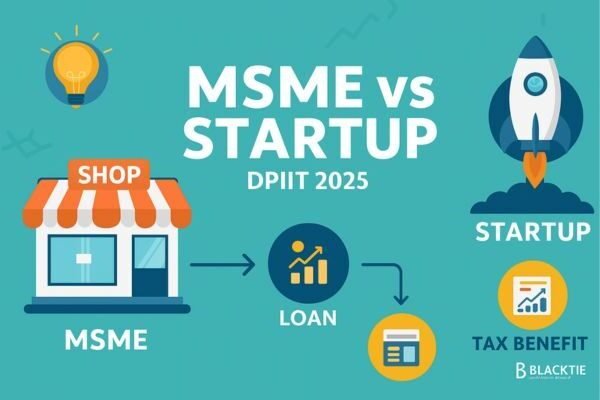
For Applying MSME Registration Click Here… What is MSME in India? When we talk about MSME vs Startup DPIIT, it is important to first understand what MSMEs are. MSME stands for Micro, Small, and Medium Enterprises, which form the backbone of India’s economy. These businesses contribute significantly to GDP, employment generation, and exports. MSMEs usually include small manufacturing units, service providers, and local businesses that require government support to sustain and grow. The Indian government has introduced multiple schemes, subsidies, and credit facilities to encourage the growth of MSMEs. By registering as an MSME, entrepreneurs can avail financial benefits, protection against delayed payments, and preference in government tenders. This makes MSME registration an attractive choice for traditional businesses compared to a DPIIT-recognized startup. Definition of MSME under MSME Act The MSME vs Startup DPIIT debate becomes clearer when we look at the legal definitions. MSMEs are officially defined under the Micro, Small, and Medium Enterprises Development (MSMED) Act, 2006. According to this Act, an MSME is a business entity engaged in the manufacturing, production, processing, or preservation of goods and services, which falls under specific investment and turnover limits notified by the Government of India. The MSME Act ensures that businesses falling within these limits can register as MSMEs and enjoy special incentives. Unlike DPIIT startups, which focus on innovation and scalability, MSMEs are defined primarily by their size, investment capacity, and turnover. MSME Classification Based on Investment and Turnover To understand MSME vs Startup DPIIT, we must know how MSMEs are classified. In India, MSMEs are categorized into three groups – Micro, Small, and Medium Enterprises. The classification is based on both investment in plant & machinery/equipment and annual turnover, as per the revised guidelines issued in July 2020. This classification helps businesses identify where they stand and what benefits they can claim. Compared to a DPIIT startup, which is recognized for its innovative business model, an MSME’s recognition is purely based on financial size and turnover limits. What is a DPIIT-Recognized Startup? In the debate of MSME vs Startup DPIIT, it’s important to know what a DPIIT-recognized startup means. DPIIT stands for the Department for Promotion of Industry and Internal Trade, which provides official recognition to startups under the Startup India scheme. A DPIIT-recognized startup is not just any new business—it is an entity that brings innovation, scalable business models, and potential for wealth and job creation. This recognition offers entrepreneurs access to various benefits such as tax exemptions, easier compliance, intellectual property support, and government funding opportunities. Unlike MSMEs, which are classified based on size and turnover, startups under DPIIT are recognized for their innovative nature and growth potential. Meaning of Startup under DPIIT Scheme When discussing MSME vs Startup DPIIT, we see that the definition of a startup is very different from an MSME. Under the DPIIT scheme, a startup is an entity that: This definition makes it clear that startups are more focused on innovation and disruption in the market. MSMEs, on the other hand, are usually traditional or small businesses with limited growth capacity, whereas a DPIIT startup aims to grow at a faster pace and attract investors. Eligibility Criteria for Startup India Recognition To further understand MSME vs Startup DPIIT, let’s look at the eligibility rules for becoming a DPIIT-recognized startup under the Startup India initiative. An entity can apply for recognition if it meets the following conditions: If these criteria are met, the business can apply for recognition on the DPIIT portal. Once approved, it becomes eligible for several benefits like tax holidays, funding opportunities, and self-certification under labor and environmental laws. MSME vs Startup DPIIT – Key Differences When comparing MSME vs Startup DPIIT, entrepreneurs often get confused about which option is better for their business. While both categories are government-supported, their scope, registration process, tax benefits, and funding opportunities differ greatly. Let’s break it down: Definition and Scope Registration Process Tax Exemptions and Benefits Funding & Credit Facilities Ease of Doing Business Support Benefits of MSME Registration When comparing MSME vs Startup DPIIT, MSME registration offers a range of advantages that make it ideal for traditional and small businesses. The government has designed special schemes to help MSMEs survive competition, access credit, and grow sustainably. Here are the major benefits: Subsidies and Loan Facilities One of the biggest benefits of MSME registration is access to subsidized loans and credit facilities. MSMEs can avail collateral-free loans under the Credit Guarantee Fund Scheme and benefit from reduced interest rates compared to regular business loans. Registered MSMEs also get financial assistance for technology upgrades, infrastructure development, and skill training programs. This makes MSMEs less dependent on private funding, unlike DPIIT startups that often rely on venture capital or angel investors. Protection Against Delayed Payments Cash flow is critical for small businesses, and delayed payments can seriously affect their operations. To safeguard MSMEs, the MSME Development Act mandates that buyers must make payments within 45 days. In case of delays, the buyer is liable to pay compound interest with monthly rests. This legal protection ensures that MSMEs remain financially stable, a feature not specifically available to DPIIT-recognized startups. Government Tenders MSMEs enjoy special preference in government procurement and tenders. Many government contracts are reserved exclusively for MSMEs, ensuring that smaller businesses get equal opportunities to work with large projects. Additionally, registered MSMEs are exempted from paying earnest money deposits (EMD) while applying for tenders. This gives them a competitive edge in securing contracts, whereas startups under DPIIT recognition have more benefits related to tax exemptions and innovation grants rather than tender preferences. Benefits of DPIIT Startup Recognition In the discussion of MSME vs Startup DPIIT, one of the biggest advantages of being a DPIIT-recognized startup is the exclusive benefits under the Startup India scheme. These benefits are designed to promote innovation, reduce compliance burdens, and help startups access funding. Let’s look at the key advantages: Tax Exemptions under Income Tax Act A major benefit of DPIIT recognition is the income tax exemption for

Scroll to Top