For Applying NGO Annual Return Click Here…
What Is NGO Registration Online and Why It Matters Today
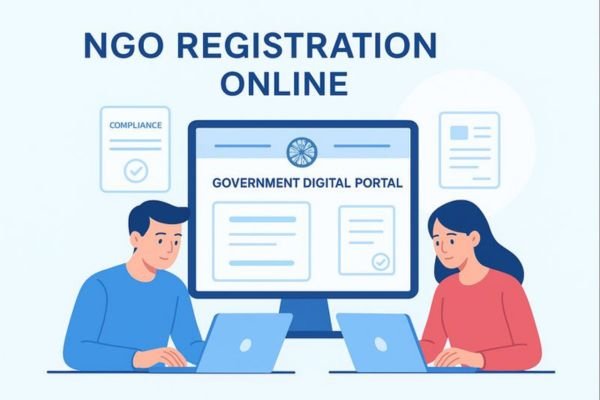
In today’s digital-driven world, NGO registration online has emerged as one of the easiest and most efficient ways to legally establish a non-governmental organization in India. Instead of visiting multiple government offices, waiting in long queues, or dealing with complicated offline paperwork, the entire registration process can now be completed from the comfort of your home or office. This digital system allows founders, social workers, and organizations to apply for registration quickly, upload documents securely, and track the status of their application in real time.
But NGO registration online is more than just convenience—it ensures transparency, faster processing, and reduced chances of errors. Since all forms and documents are submitted digitally, it becomes easier for authorities to verify them and approve applications without delays. This modern approach also helps new NGOs build credibility, as a properly registered organization is more likely to receive government support, corporate CSR funding, and public trust.
In a world where social impact and community development rely heavily on structure and accountability, NGO registration online matters because it empowers individuals and groups to formalize their mission quickly and legally. Whether you aim to work in education, health, women empowerment, environmental protection, or any other cause, online registration makes it easier to get recognized and start your journey toward creating real change.
Step-by-Step Guide to Completing NGO Registration Online
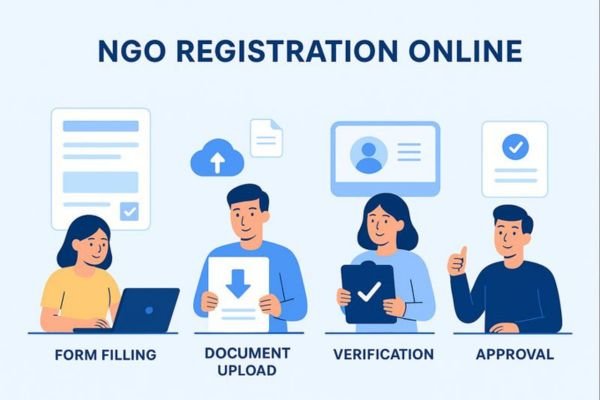
Completing NGO registration online may seem complicated at first, but the process is actually quite simple once you understand the required steps. The government has digitized most of the documentation and application procedures, making it faster and more accessible for anyone who wants to start a non-profit organization. Here’s a clear, step-by-step guide to help you register your NGO without confusion:
1. Choose the Right Type of NGO
Before you begin the NGO registration online process, decide whether you want to register as:
- A Trust
- A Society
- A Section 8 Company
Each structure serves a different purpose and has specific legal requirements. Your choice will determine which documents you need and where to apply.
2. Prepare the Essential Documents
The next step is gathering the paperwork needed for NGO registration online. Common documents include:
- Identity proofs of all members
- Address proof of the registered office
- Photographs
- Draft of the NGO’s objectives
- Memorandum of Association (MOA) or Trust Deed, depending on the structure
Having these documents ready ensures a smooth and quick application process.
3. Create an Online Account on the Relevant Portal
To start the NGO registration online process, visit the official government portal that corresponds to your chosen NGO type. Once there, create an account using your email ID and mobile number. This account will allow you to submit your application, upload documents, and track progress.
4. Fill Out the Online Application Form
After logging in, fill in all the required information accurately. This includes the NGO’s name, purpose, member details, and address. Make sure every detail is correct because errors can cause delays in the NGO registration online approval.
5. Upload All Supporting Documents
The portal will prompt you to upload scanned copies of your documents. Ensure they are clear, readable, and uploaded in the correct format. Since NGO registration online is fully digital, proper document uploading is a crucial step.
6. Pay the Registration Fee
Once the form and documents are submitted, you’ll be directed to make the payment. The fee varies depending on the registration type. The online payment system makes the fee submission simple and secure.
7. Verification and Approval
After you submit your application, the authorities will review your details and documents. If everything is in order, your NGO registration online will be approved. If any corrections are needed, you’ll be notified through email or the portal dashboard.
8. Download Your Registration Certificate
Once approved, you can download your official NGO registration certificate directly from the portal. This certificate is essential for opening a bank account, applying for licenses, or receiving CSR funds.
Top Benefits of Applying for NGO Registration Online
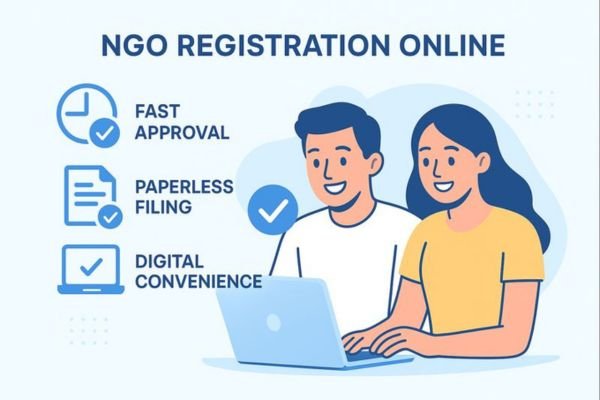
Choosing NGO registration online offers several practical advantages that make the entire process smoother, faster, and far more convenient than traditional offline methods. As more organizations move toward digital systems, online registration has become the preferred route for anyone looking to start a legally recognized non-profit. Here are the top benefits of applying online:
1. Quick and Hassle-Free Process
One of the biggest benefits of NGO registration online is the speed. Instead of waiting in long queues or scheduling visits to government offices, you can complete the entire process digitally. This saves time and allows you to focus more on building your NGO rather than navigating paperwork.
2. Convenience From Anywhere
Online registration eliminates geographical restrictions. Whether you’re in a metro city or a remote town, NGO registration online makes it possible to apply from wherever you are. All you need is a stable internet connection and the relevant documents.
3. Transparent and Error-Free
The digital system ensures transparency at every step. When you apply for NGO registration online, the portal guides you through the process, reducing confusion and minimizing errors. You also get real-time updates on your application status, so you’re never left in the dark.
4. Faster Document Verification
Since all documents are uploaded digitally, verification becomes quicker and more systematic. This significantly reduces the time taken for approvals and helps you get your NGO officially registered sooner.
5. Secure Digital Record Keeping
With NGO registration online, every document and application detail is stored securely on the government portal. This means you can easily access past submissions, download certificates, or retrieve information whenever needed.
6. Cost-Effective and Efficient
Applying online often reduces the extra costs associated with travel, middlemen, or physical paperwork. The process is straightforward, making NGO registration online a more cost-efficient option for new organizations looking to save resources.
7. Builds Credibility for the NGO
A properly registered NGO is more likely to gain trust from donors, partners, and government bodies. Since the online process is streamlined and standardized, NGO registration online adds an extra layer of credibility to your organization.
8. Easy Tracking and Updates
One of the most user-friendly advantages is the ability to track your application status online. With NGO registration online, you can log into the portal anytime to check updates, approval stages, or requests for corrections.

Documents Required for NGO Registration Online
Before you begin the process of NGO registration online, it’s important to prepare the necessary documents in advance. Having all your paperwork ready will make the registration process smooth, quick, and error-free. While the exact documents may vary depending on whether you’re registering a Trust, Society, or Section 8 Company, the following list covers the most commonly required documents.
1. Identity Proof of All Members
You’ll need clear and valid identity proof for every founding member of the NGO. This can include:
- Aadhaar Card
- PAN Card
- Passport
- Voter ID
These documents help the authorities verify the authenticity of the individuals involved in the NGO registration online process.
2. Address Proof of the Registered Office
A registered office address is mandatory. You can submit:
- Electricity bill
- Water bill
- Property tax receipt
- Rent agreement with NOC (if rented)
This ensures the NGO has a legal and stable workspace for correspondence.
3. Passport-Sized Photographs
Recent, clear passport-size photos of all key members must be uploaded when applying for NGO registration online. These are used for official identification and verification.
4. Memorandum of Association (MOA) and Articles of Association (AOA) or Trust Deed
Depending on the type of NGO:
- A Trust requires a Trust Deed
- A Society requires an MOA and Rules & Regulations
- A Section 8 Company requires MOA and AOA
These documents clearly outline your NGO’s objectives, working structure, and responsibilities.
5. Details of Executive Committee or Board Members
You’ll need to provide the names, contact details, professional backgrounds, and roles of all board members. This step adds transparency and supports the verification process during NGO registration online.
6. PAN Card of the NGO (if applicable)
In many cases, authorities may request a PAN card for the NGO. If you don’t have one yet, you may be asked to apply for it after the initial registration.
7. Declaration or Consent Letters From Members
Each member must provide a written consent letter stating their willingness to be part of the NGO. This is an essential requirement for smooth approval during the NGO registration online process.
8. Proof of Address for All Members
Apart from ID proof, address proof such as utility bills, bank statements, or Aadhaar details may be required to verify the residential addresses of all members.

Different Types of NGOs You Can Register Online
When you begin the process of NGO registration online, one of the first decisions you need to make is choosing the type of NGO structure that best suits your mission. Each structure has its own legal framework, purpose, and documentation requirements. Understanding the differences will help you choose the right path for your organization. Here are the main types of NGOs you can register online:
1. Trust
A Trust is one of the most common NGO structures in India. It is typically formed to promote charitable activities such as education, healthcare, or social welfare.
Key Features:
- Governed by the Indian Trusts Act, 1882
- Requires at least two trustees
- A Trust Deed is mandatory
- Simple and straightforward registration process
Trusts are ideal for individuals or families planning long-term charitable initiatives. With NGO registration online, setting up a Trust has become easier and quicker.
2. Society
A Society is formed for promoting art, culture, education, sports, or social welfare activities. It is managed by a group of individuals who come together for a common purpose.
Key Features:
- Register under the Societies Registration Act, 1860
- Requires a minimum of seven members
- Needs an MOA (Memorandum of Association) and Rules & Regulations
- Offers more democratic management compared to a Trust
Societies are perfect for community-driven initiatives or group-based causes. Thanks to NGO registration online, forming a Society is now much more transparent and accessible.
3. Section 8 Company
A Section 8 Company is a more formal and structured NGO model. It is ideal for organizations that want higher credibility, corporate partnerships, and long-term national or international operations.
Key Features:
- Registered under the Companies Act, 2013
- Requires at least two directors
- Needs MOA and AOA
- Higher compliance but higher credibility
Because of its strong legal standing, a Section 8 Company is often preferred by NGOs seeking CSR funding. With NGO registration online, the process of registering a Section 8 Company has become faster and fully digitized.
Which One Should You Choose?
Your choice depends on:
- The scale of your operations
- Number of people involved
- Long-term vision of your NGO
- Funding and compliance expectations
No matter which structure you choose, NGO registration online ensures a smooth, convenient, and transparent registration process that allows you to start your social impact journey without unnecessary delays.
Common Mistakes to Avoid During NGO Registration Online
While the process of NGO registration online has made things easier, many applicants still face delays or rejections—often due to simple, avoidable mistakes. Understanding these common errors will help you complete your registration smoothly and get approval without unnecessary complications. Here are the top mistakes you should avoid:
1. Choosing the Wrong NGO Structure
One of the most frequent errors during NGO registration online is selecting an incorrect structure—Trust, Society, or Section 8 Company—without understanding its requirements. Each structure has different legal obligations, documentation needs, and governance rules. Choosing the right one from the beginning ensures a smoother registration and future compliance.
2. Submitting Incomplete or Incorrect Documents
Many applications are rejected simply because essential documents are missing, unclear, or incorrectly uploaded. Blurry photos, mismatched signatures, or incomplete MOA/Trust Deeds can cause major delays. Before starting NGO registration online, make sure all documents are ready, properly scanned, and meet the portal’s format requirements.
3. Providing Inaccurate Member Details
Incorrect information about board members—wrong IDs, outdated addresses, or inconsistent signatures—can lead to verification issues. Since NGO registration online relies heavily on digital verification, accuracy is extremely important.
4. Not Drafting a Clear Objective Statement
Your NGO’s objective must be clearly written and aligned with legal guidelines. A vague or poorly defined mission statement can raise red flags during the NGO registration online process. Take time to draft a purpose that is concise, meaningful, and compliant with your chosen NGO type.
5. Ignoring Portal Notifications or Email Updates
Many applicants miss important correction requests simply because they don’t check their email or login dashboard. When applying for NGO registration online, make sure you regularly monitor all notifications to avoid missing deadlines or follow-up steps.
6. Using Incorrect Office Address or Lack of NOC
If your registered office is rented, you must provide a valid NOC from the property owner. Missing or incorrect address proof creates verification delays. Always ensure your address documents match the details filled in your NGO registration online application.
7. Relying on Unverified Third-Party Agents
While professional assistance can be helpful, relying on unqualified agents may result in incorrect filings or hidden charges. Since NGO registration online is straightforward, you can complete it yourself or seek help from trusted professionals only when necessary.
8. Skipping Pre-Registration Planning
Some founders rush into registration without planning governance structures, roles, or documentation. Proper planning ensures your NGO registration online proceeds smoothly and your organization starts on a strong foundation.
How Long Does NGO Registration Online Take?
One of the most common questions new founders ask is how much time it actually takes to complete NGO registration online. The truth is, the duration can vary depending on the type of NGO you choose and how accurately you submit your documents. However, compared to traditional offline methods, the online process is much faster and more efficient.
1. Processing Time for Trust Registration
If you are registering a Trust, the NGO registration online process is usually the quickest.
Estimated duration: 7 to 15 days
This timeframe includes document submission, verification, and trust deed approval. Submitting correct and clear documents can significantly speed up the process.
2. Processing Time for Society Registration
Society registration generally takes a bit longer because it involves multiple members and more detailed documentation.
Estimated duration: 15 to 30 days
The verification stage may take additional time if your state’s registrar receives a high number of applications. Still, the online system helps streamline updates and communication.
3. Processing Time for Section 8 Company Registration
Section 8 Company registration is the most structured and compliance-heavy among all NGO types.
Estimated duration: 20 to 45 days
This includes obtaining name approval, preparing MOA and AOA, document verification, and final certificate issuance. Thanks to NGO registration online, you can complete all these steps digitally without any physical visits.
4. Factors That Can Affect the Timeline
Several factors can influence how long your NGO registration online takes, such as:
- Incomplete or incorrect documents
- Errors in application form
- Delay in responding to correction requests
- State-wise processing speed
- Type of NGO structure chosen
Ensuring that everything is accurate from the beginning is the best way to get approval faster.
5. Why the Online Process Is Faster
The biggest advantage of NGO registration online is that it removes manual bottlenecks. Digital verification, online uploads, and automated updates make the process quicker compared to traditional offline procedures, where paperwork used to take weeks or even months.
Eligibility Criteria for NGO Registration Online
Before you begin the process of NGO registration online, it’s important to understand whether you meet the basic eligibility criteria set by the government. These guidelines ensure that only genuine, purpose-driven individuals and groups are able to register and operate as recognized non-profit organizations. Here are the key eligibility requirements you should be aware of:
1. Minimum Members Required
The number of people needed to start an NGO depends on the type of structure:
- Trust: Minimum 2 trustees
- Society: Minimum 7 members
- Section 8 Company: Minimum 2 directors
These members must be adults and capable of taking legal responsibility during the NGO registration online process.
2. Legal Purpose or Social Objective
To qualify for NGO registration online, your organization must have a valid charitable or social objective. Accepted causes include:
- Education
- Health and sanitation
- Women empowerment
- Environmental protection
- Child welfare
- Rural development
- Poverty alleviation
Your objective should be clear, lawful, and focused on public welfare.
3. Age Requirement for Founders
All founding members involved in NGO registration online must be at least 18 years old. They should also possess valid identity and address proof to complete the verification process.
4. No Profit Distribution
NGOs must function solely for charitable purposes. This means:
- Profits cannot be distributed to members
- Funds must be used strictly for social activities
This is a core requirement for completing NGO registration online under any structure.
5. Registered Office Address
You must have a legitimate registered office address where your NGO will operate from. Acceptable proofs include:
- Rent agreement + NOC
- Utility bill
- Property tax receipt
This address will be used for correspondence and official records throughout the NGO registration online process.
6. Indian Citizenship or Valid Residency
Most members involved in the registration must be Indian citizens or individuals with valid residency proof. Foreign citizens can be part of the NGO in special cases, but additional documentation may be required.
7. Clear Documentation and Identity Proof
Every member must have:
- PAN card
- Aadhaar card
- Passport-size photographs
These documents are essential for identity verification during NGO registration online.
8. Willingness to Follow Compliance and Reporting
NGOs must follow annual financial reporting, audits, and activity records. This commitment to transparency is a key eligibility requirement for completing NGO registration online successfully.
Costs Involved in NGO Registration Online
Understanding the expenses involved in NGO registration online is an important step before starting the process. While the digital method is far more cost-effective than traditional offline registration, the exact cost can vary based on the type of NGO you choose, the state you’re registering in, and whether you hire professional assistance. Here’s a clear breakdown of the common costs associated with online NGO registration.
1. Government Registration Fees
Each type of NGO structure has its own set of government fees:
- Trust Registration: Usually minimal and varies by state
- Society Registration: Generally moderate due to state-specific charges
- Section 8 Company: Higher due to company laws and multiple compliance steps
These fees cover the official processing and certification involved in NGO registration online.
2. Document Preparation Costs
You may need to create legal documents such as:
- Trust Deed
- MOA (Memorandum of Association)
- AOA (Articles of Association)
If you hire a legal expert or consultant for drafting these documents, the cost will vary based on the complexity of your NGO and the expertise required.
3. Digital Signature Certificate (DSC) Fees
For Section 8 Companies—and sometimes Societies—founders may need a Digital Signature Certificate to complete NGO registration online.
Estimated cost: Moderate, depending on the service provider.
DSCs help verify your identity and are essential for digitally signing forms.
4. Notary and Stamp Duty Charges
Some states require notarization or stamp duty for certain legal documents.
These charges depend on:
- Your state laws
- The value of your NGO’s Trust Deed or MOA
Stamp duty is usually higher for Trusts and can vary significantly across states.
5. Professional or Consultant Fees (Optional)
If you choose to hire:
- A lawyer
- A chartered accountant
- A registration consultant
…you may incur additional fees. While NGO registration online is simple enough to do yourself, many founders opt for expert help to avoid mistakes or delays.
6. Miscellaneous Expenses
There may be small additional costs for:
- Scanning and printing documents
- Uploading high-quality digital files
- Correcting errors or reapplying (in rare cases)
These are usually minor but worth keeping in mind.
7. Overall Estimated Cost Range
Here’s a general estimate to help you plan for NGO registration online:
- Trust: Low to moderate cost
- Society: Moderate cost
- Section 8 Company: Moderate to high cost
Section 8 Companies tend to be the most expensive due to the detailed documentation and higher compliance requirements.
Trust vs Society vs Section 8 Company: Which Is Better for NGO Registration Online?
When starting a non-profit, one of the biggest decisions you’ll face is choosing the right legal structure. Since the entire process of NGO registration online is streamlined and digital, it’s easy to register any of the three major types—Trust, Society, or Section 8 Company. However, each option has different features, benefits, compliance requirements, and long-term implications. Understanding these differences will help you decide which structure best suits your NGO’s goals.
1. Trust – Simple and Ideal for Small to Medium Charitable Work
A Trust is the most common and easiest form of NGO to set up.
Best for:
- Educational programs
- Health initiatives
- Religious or charitable activities
- Family-run or small-group projects
Pros:
- Quick and simple NGO registration online
- Minimal compliance requirements
- Lower costs
- Easy management structure
Cons:
- Less flexibility in governance
- Trustees have lifelong roles (unless specified otherwise)
- Not ideal for large or highly structured operations
If you want a straightforward setup with minimal paperwork, a Trust is a great choice.
2. Society – Best for Group-Based Social Initiatives
A Society involves a larger group of people and focuses on community-oriented activities.
Best for:
- Cultural, literacy, and welfare programs
- Group-driven projects
- Public awareness campaigns
Pros:
- More democratic management
- Suitable for community-focused work
- Structured decision-making through an elected governing body
- Easily registered through NGO registration online
Cons:
- Requires at least 7 members
- Compliance and reporting may be slightly more than Trusts
- Rules vary from state to state
A Society is ideal if you want multiple people actively involved in managing the NGO.
3. Section 8 Company – Most Credible and Preferred for Large NGOs
This is the most structured and professional form of NGO.
Best for:
- NGOs seeking CSR funding
- Large-scale or national-level operations
- Organizations requiring strong legal recognition
Pros:
- Highest credibility among donors, corporates, and government bodies
- Strong compliance and governance structure
- Easy to expand nationally or internationally
- Fully digital and seamless NGO registration online process
Cons:
- Higher registration costs
- More legal and financial compliance
- Requires directors, documents, and digital signatures
If you want long-term growth, partnerships, and formal operations, a Section 8 Company is the best option.
Which One Should You Choose?
Here’s a quick comparison to help you decide:
| NGO Type | Best For | Cost | Compliance | Credibility | Members Needed |
| Trust | Small/medium charitable work | Low | Low | Moderate | 2+ |
| Society | Community/social groups | Moderate | Moderate | Good | 7+ |
| Section 8 Company | Professional, large-scale NGOs | Moderate-high | High | Excellent | 2+ |
Final Verdict
- Choose Trust if you want simplicity and low maintenance.
- Choose Society if you want group-based, democratic management.
- Choose Section 8 Company if credibility, funding, and expansion are priorities.
No matter which structure you select, NGO registration online ensures a smoother, faster, and more transparent process.
How to Choose the Right Online Platform for NGO Registration
With so many websites and service providers available today, choosing the right platform for NGO registration online can feel overwhelming. The platform you select plays a major role in determining how smooth, transparent, and reliable your registration experience will be. To help you make an informed decision, here are the key factors to consider before choosing an online platform for your NGO registration.
1. Check Whether the Platform Is Authorized or Recognized
The most important step is to ensure the platform you choose is trusted, legitimate, and recognized for offering NGO registration online services.
Look for:
- Government portals
- MCA (Ministry of Corporate Affairs) for Section 8 Companies
- State-specific Society/Trust registration websites
- Verified private service providers with strong credibility
Avoid unverified websites that make unrealistic promises.
2. Look for Transparency in Pricing
A reliable platform will clearly list its charges and provide itemized details for:
- Consultation
- Document drafting
- Government fees
- Digital signatures
- Filing charges
Choose a platform that is open about costs and doesn’t surprise you with hidden fees during the NGO registration online process.
3. Evaluate Customer Support Quality
Good customer support can make a huge difference, especially if this is your first time registering an NGO.
Your chosen platform should offer:
- Quick responses
- Knowledgeable staff
- Live chat or phone support
- Guidance at every step
This ensures you don’t feel stuck during NGO registration online, especially when uploading documents or filling complex forms.
4. Check User Reviews and Testimonials
Before selecting a platform, read what other users have shared about their experience.
Positive reviews highlight:
- Fast processing
- Smooth documentation
- Professional handling
- Accurate filing
Reviews are one of the best indicators of how dependable a platform is for NGO registration online.
5. Assess the Platform’s Expertise
Different NGO types—Trusts, Societies, or Section 8 Companies—require different documentation and compliance. Choose a platform with proven expertise in handling your specific registration type. This increases your chances of approval without delays.
6. Look for End-to-End Services
The best platforms support you through the entire journey, including:
- Name approval
- Drafting MOA/AOA or Trust Deed
- DSC support
- Application filing
- Certificate download
- Post-registration compliance
Choosing such a platform ensures your NGO registration online is complete and professional.
7. Prioritize Data Security
During registration, you will upload sensitive documents like ID proofs, PAN cards, address proofs, and legal papers. Make sure the platform uses:
- SSL encryption
- Secure servers
- Trusted payment gateways
Security is essential to protect your information throughout the NGO registration online process.
8. Consider Processing Speed
Some platforms have dedicated teams that help fast-track your application. If time is a priority, choose a portal known for efficient and timely submissions.
Expert Tips to Simplify Your NGO Registration Online Process
Starting the process of NGO registration online can feel overwhelming, especially if you’re doing it for the first time. However, with the right approach and preparation, you can make the entire process smooth, stress-free, and efficient. Here are some expert-backed tips to help you simplify your online NGO registration journey and avoid common pitfalls.
1. Finalize Your NGO’s Objective Clearly
Before starting your application, create a crystal-clear objective statement.
A well-defined mission helps:
- Draft legal documents more effectively
- Avoid confusion during verification
- Ensure your purpose aligns with legal NGO guidelines
Clear objectives make the NGO registration online process quicker and more accurate.
2. Choose the Right Structure Early
Whether you opt for a Trust, Society, or Section 8 Company, decide at the beginning. Each structure has unique requirements, so finalizing this early helps you gather the right documents and follow the right portal during NGO registration online.
3. Prepare All Documents in Advance
Document-related errors are the biggest cause of delays. To speed up NGO registration online, make sure you have:
- Clean and clear ID proofs
- Properly scanned documents
- Address proofs that match your application
- Drafts of your MOA, AOA, or Trust Deed
This preparation avoids last-minute confusion.
4. Use High-Quality Scans
Government portals may reject blurry or unclear uploads. Use a scanner or a good mobile scanning app to upload professional-quality documents during NGO registration online.
5. Double-Check Member Details
Ensure every member’s name, address, and signature match their ID proofs. Even small mismatches can trigger verification issues and delay your NGO registration online approval.
6. Respond Quickly to Portal Notifications
After submitting your application, check your email and dashboard regularly.
Timely responses to correction requests significantly speed up the NGO registration online process.
7. Opt for a Reliable and Experienced Platform
If you’re using a private portal or consultant, choose one with:
- Good reviews
- Transparent pricing
- Experience in NGO setups
- Secure data handling
A trustworthy platform can simplify your NGO registration online experience and reduce errors.
8. Understand State-Specific Rules
Trust and Society registrations may vary from state to state. Check your state’s guidelines in advance to avoid confusion later in the NGO registration online process.
9. Get a Digital Signature (If Required) Early
Section 8 Company registration requires Digital Signature Certificates (DSCs). Getting them early speeds up filing and prevents unnecessary delays in your NGO registration online.
10. Keep Your Registered Office Address Valid
Make sure the registered office address and NOC (if required) are accurate and legally valid. Address errors can cause major setbacks in verification.
11. Maintain Copies of Everything
Keep digital backups of:
- All submitted forms
- Uploaded documents
- Payment receipts
- Communication from authorities
This helps you resolve any issues immediately during NGO registration online.
Why NGO Registration Online Is the Future of Social Sector Compliance
The digital shift in governance and public service delivery has transformed how social sector organizations operate today. Among these developments, NGO registration online has emerged as a game-changing upgrade for new and existing non-profits. It not only streamlines the registration process but also makes compliance more accessible, transparent, and future-ready. Here’s why online NGO registration is paving the way for the future of social sector compliance.
1. Faster, More Transparent Processes
Traditional NGO registration often meant waiting in long queues, dealing with physical paperwork, and depending heavily on intermediaries.
With NGO registration online, everything becomes faster and more transparent:
- No manual file movements
- Automated status tracking
- Quick verification
- Reduced human errors
This digital approach creates a more trustworthy registration and compliance environment.
2. Greater Accessibility for Founders Across India
Many aspiring social entrepreneurs live in remote or rural areas where reaching government offices is difficult.
Online registration removes geographical barriers by letting founders complete all formalities from:
- Their home
- A smartphone
- Any cyber café or digital center
This accessibility ensures more people can start NGOs without unnecessary limitations.
3. Digital Document Management Reduces Hassles
Gone are the days of carrying bulky folders of documents.
NGO registration online supports:
- Secure digital uploads
- Easy updates
- Quick corrections
- Organized record-keeping
This helps NGOs maintain compliance effortlessly and reduce the risk of losing important records.
4. Boosts Accountability and Good Governance
Online systems record timestamps, digital signatures, and audit trails.
This strengthens:
- Accountability
- Transparency
- Governance standards
For the social sector—which operates on public trust—this shift significantly improves credibility and reliability.
5. Aligns Indian NGOs With Global Standards
Most nations now encourage paperless compliance for non-profits.
By adopting NGO registration online, India aligns its social sector with:
- International best practices
- Faster digital governance
- Higher compliance standards
This becomes especially beneficial for NGOs seeking foreign funding or global collaborations.
6. Reduced Dependency on Middlemen
Digital registration empowers founders to complete the entire process themselves, minimizing dependence on intermediaries who often inflate costs or cause delays.
This ensures NGOs begin their journey on a fully transparent foundation.
7. Easier Updation, Renewal, and Compliance Filings
Beyond registration, the future of compliance lies in:
- Online renewal
- Digital certificate download
- Online tax filings
- Automated reminders
The same portal used for NGO registration online often supports these functions, making long-term compliance effortless.
8. Supports the Government’s Digital India Vision
The push toward online NGO systems aligns perfectly with India’s nationwide digitization movement.
This ensures that future policies, upgrades, and compliance requirements will likely continue to favor NGO registration online over manual processes.
9. Ensures Faster Legal Recognition for New NGOs
Since online processes cut down documentation errors and physical delays, NGOs get legal recognition faster.
This allows them to:
- Start operations sooner
- Apply for grants early
- Build credibility quickly
Faster recognition strengthens the entire social development ecosystem.
How to Track the Status of Your NGO Registration Online Application
Once you’ve submitted your application for NGO registration online, the next important step is tracking its progress. Monitoring the status helps you stay updated, respond quickly to required corrections, and ensure your registration gets approved without unnecessary delays. Thankfully, most government portals provide simple and transparent ways to check your application status in real time. Here’s how you can do it easily.
1. Visit the Official Portal You Applied On
Different types of NGOs—Trusts, Societies, and Section 8 Companies—are registered through different portals.
To track your NGO registration online status:
- Go to the same website where you submitted your application
- Log in using your registered email or mobile number
- Navigate to the “Track Status” or “Application Status” section
This is the most accurate place to check updates.
2. Enter Your Application or Reference Number
After submitting your form, you would have received an acknowledgment or reference number.
Use this number to:
- Access your file
- Check current progress
- View pending tasks or errors
Always store this number safely, as it is crucial for tracking your NGO registration online application.
3. Check Email and SMS Notifications
Most portals send automated alerts about:
- Corrections required
- Document re-upload requests
- Verification updates
- Approval or rejection notices
Make sure to monitor your registered email and phone regularly. Many applicants miss important messages and unknowingly delay their NGO registration online approval.
4. Use the Dashboard for Real-Time Updates
When you log in, your dashboard will show:
- Your application status (Pending, Verified, Under Review, Approved, or Rejected)
- Uploaded documents
- Any discrepancies flagged by the officers
- Payment confirmation details
The dashboard gives a clear overview of your NGO registration online progress and what actions, if any, you need to take.
5. Contact the Support Helpline (If Needed)
If your application is taking longer than expected or you face technical issues, you can contact customer support. Provide:
- Your application number
- Registered mobile/email
- Date of submission
Government helplines or portal-specific support teams can help you understand delays related to your NGO registration online.
6. Check for State-Specific Tracking Methods
For Trusts and Societies, different states may have:
- Separate portals
- Local status-tracking systems
- District-level verification dashboards
Always refer to your state’s official website to track the NGO registration online status accurately.
7. Keep Copies of All Receipts and Submissions
Receipts, payment confirmations, and acknowledgment slips often contain important details needed for tracking.
Keep everything organized in a digital folder so you can easily follow up if the portal requires re-verification.
Frequently Asked Questions About NGO Registration Online
When it comes to starting a non-profit, many founders have doubts regarding the process, documents, costs, and timelines. To help you understand things better, here are the most commonly asked questions about NGO registration online, answered in a simple and beginner-friendly way.
What is NGO registration online?
NGO registration online is the digital process of registering a Trust, Society, or Section 8 Company using government-approved portals. It eliminates physical paperwork and allows founders to complete all steps—form submission, document upload, payment, and tracking—directly through the internet.
Is NGO registration online mandatory?
Yes, if you want legal recognition, open a bank account in the NGO’s name, apply for funding, or claim tax exemptions, you must complete NGO registration online or through the official offline process.
How long does NGO registration online take?
The timeline depends on the type of NGO.
On average:
Trust: 7–15 days
Society: 15–30 days
Section 8 Company: 20–40 days
Delays can happen if documents are unclear or corrections are required.
What documents are required for NGO registration online?
Common documents include:
ID and address proofs of members
Passport-size photos
Registered office address proof
NOC from landlord (if applicable)
TrustDeed / MOA / AOA draft
Digital Signature Certificate (for Section 8 Company)
Requirements may vary by NGO type and state.
Is it possible to register an NGO online without visiting any office?
Yes. In most cases, NGO registration online can be completed 100% digitally—especially for Section 8 Companies. Some states may require physical verification for Trusts or Societies.
What is the cost of NGO registration online?
The cost varies based on the NGO type:
Trust: ₹2,000–₹10,000
Society: ₹5,000–₹15,000
Section 8 Company: ₹10,000–₹25,000
Fees can increase depending on professional assistance and state charges.
Which type of NGO is best for online registration?
If you need maximum credibility, tax benefits, and government compliance, a Section 8 Company is considered the best option. However, Trusts and Societies are also popular for community-based projects.
Can I register an NGO online with only one person?
No.
Minimum members required:
Trust: 2 or 3 (depending on state)
Society: 7
Section 8 Company: 2 directors + 2 shareholders
You cannot complete NGO registration online as a single individual.
Do I need a Digital Signature Certificate (DSC) for NGO registration online?
A DSC is mandatory only for Section 8 Company registration. Trusts and Societies usually do not require it unless stated by the state’s portal.
Can foreigners be part of an NGO registered online?
Yes, foreigners can be members or trustees—depending on the type of NGO. However, additional documents such as passport copies and FRRO approvals may be required.
Can the registered office be at a rented property?
Yes.
You just need an NOC from the landlord along with a rent agreement or utility bill to complete NGO registration online.
What happens after submitting the online application?
After submission:
Authorities review your documents
Verification begins
Corrections (if any) are conveyed
Final approval is granted
You receive your registration certificate digitally