
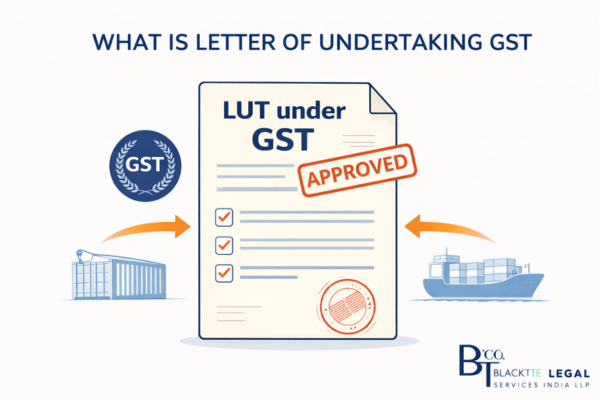
For Applying GST LUT Filing Click Here…
What Is Letter of Undertaking GST?
A Letter of Undertaking GST (commonly known as LUT) is a simple declaration submitted by a registered taxpayer under the GST law. Through this declaration, the taxpayer promises the government that they will comply with GST rules while supplying goods or services without charging Integrated GST (IGST).
In practical terms, the Letter of Undertaking GST is mainly used by exporters. It allows them to export goods or services outside India, or supply to Special Economic Zones (SEZ), without paying IGST upfront. Instead of blocking funds in tax payments and later claiming refunds, exporters can operate smoothly using this undertaking.
The Letter of Undertaking GST is filed online through the GST portal in Form GST RFD-11 and is usually valid for one financial year. It helps reduce paperwork, improve cash flow, and make the export process more efficient for businesses.
Why Is Letter of Undertaking GST Required Under GST Law?
The Letter of Undertaking GST is required to ensure a balance between trade facilitation and tax compliance. Under GST law, exports and SEZ supplies are treated as zero-rated supplies, meaning they should not be burdened with tax. However, the government also needs assurance that exporters will meet all legal obligations.
By filing a Letter of Undertaking GST, the taxpayer gives a formal promise that:
- Goods or services will be exported within the prescribed time limit
- All GST rules will be followed
- Any tax liability arising due to non-compliance will be paid along with interest
Without a Letter of Undertaking GST, exporters would be required to pay IGST first and then apply for a refund, which can cause cash flow issues and delays. The LUT system simplifies this process and promotes ease of doing business while safeguarding government revenue.
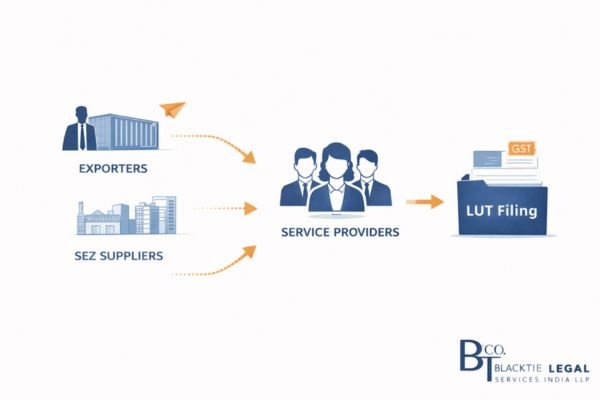
Who Needs to File Letter of Undertaking GST?
The Letter of Undertaking GST needs to be filed by registered taxpayers who intend to make zero-rated supplies without paying IGST. This typically includes:
- Exporters of goods outside India
- Exporters of services
- Suppliers making supplies to Special Economic Zones (SEZ developers or units)
Any GST-registered person who wants to export without upfront tax payment must submit the Letter of Undertaking GST at the beginning of each financial year. However, taxpayers who have been prosecuted for serious GST offenses involving tax evasion above the prescribed limit are not eligible to file LUT and must furnish a bond instead.
For eligible businesses, filing the Letter of Undertaking GST is an important compliance step that ensures smooth export operations, better liquidity, and reduced administrative burden.
Understanding LUT in GST
Under the Goods and Services Tax regime, exports and supplies to Special Economic Zones are treated differently from domestic supplies. To support exporters and reduce their financial burden, GST law introduced the concept of Letter of Undertaking GST (LUT). This mechanism allows eligible taxpayers to supply goods or services without paying Integrated GST upfront, making the export process smoother and more practical.
Understanding the meaning, legal framework, and objectives of the Letter of Undertaking GST is essential for businesses involved in international trade or SEZ supplies.
Meaning of Letter of Undertaking GST
The Letter of Undertaking GST is a written declaration submitted by a registered taxpayer to the GST authorities, stating that they will comply with all conditions prescribed under GST law while making zero-rated supplies.
By furnishing a Letter of Undertaking GST, the taxpayer commits that:
- Goods will be exported or supplied to SEZ within the prescribed time limit
- Services will be exported as per GST rules
- Any applicable tax, interest, or penalty will be paid if conditions are violated
In simple terms, the Letter of Undertaking GST acts as a trust-based assurance given to the government. It eliminates the need for paying IGST at the time of export and later claiming a refund, thereby improving cash flow and reducing procedural delays for exporters.
Legal Provisions Related to Letter of Undertaking GST
The Letter of Undertaking GST is governed by specific provisions under GST law to ensure proper compliance. The main legal framework includes:
- Section 16 of the IGST Act, 2017, which defines zero-rated supplies such as exports and supplies to SEZ
- Rule 96A of the CGST Rules, 2017, which allows exporters to furnish a Letter of Undertaking GST instead of paying IGST
As per these provisions, eligible taxpayers can submit Form GST RFD-11 electronically on the GST portal before making zero-rated supplies. The Letter of Undertaking GST is generally valid for one financial year and must be renewed annually.
If the exporter fails to meet the conditions mentioned in the LUT, the GST authorities have the right to demand the tax along with interest, ensuring accountability under the law.
Objectives of Letter of Undertaking GST
The Letter of Undertaking GST was introduced with multiple objectives aimed at simplifying exports and promoting ease of doing business. Key objectives include:
- Reducing financial burden on exporters by avoiding upfront IGST payment
- Improving cash flow for businesses engaged in exports or SEZ supplies
- Simplifying compliance procedures under GST
- Encouraging exports by making Indian goods and services more competitive globally
- Ensuring legal accountability through a formal undertaking mechanism
Overall, the Letter of Undertaking GST strikes a balance between trade facilitation and regulatory control, allowing genuine exporters to operate efficiently while maintaining compliance with GST law.
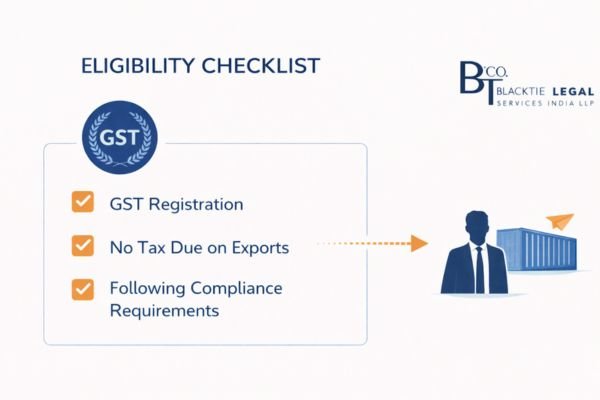
Eligibility & Applicability
Before filing a Letter of Undertaking GST, it is important to understand who is allowed to furnish it and in which situations it applies. While LUT is a beneficial facility for exporters, GST law has clearly defined eligibility conditions to ensure that only compliant taxpayers can avail this option.
Who Is Eligible for Letter of Undertaking GST?
A Letter of Undertaking GST can be furnished by any registered taxpayer who intends to make zero-rated supplies without payment of Integrated GST (IGST). Generally, the following persons are eligible:
- Exporters of goods to countries outside India
- Exporters of services meeting the conditions of export under GST
- Suppliers making goods or services supply to Special Economic Zone (SEZ) developers or units
To be eligible for filing a Letter of Undertaking GST, the taxpayer must be registered under GST and should have a good compliance record. The LUT is usually filed at the beginning of each financial year and remains valid for that year, allowing multiple exports under a single undertaking.
Who Cannot Furnish Letter of Undertaking GST?
Not every GST-registered person is allowed to file a Letter of Undertaking GST. The law restricts certain taxpayers from availing this facility to prevent misuse.
A taxpayer cannot furnish Letter of Undertaking GST if they have been prosecuted for any offense under the GST law or earlier indirect tax laws involving tax evasion beyond the prescribed monetary limit. In such cases, the taxpayer is required to furnish a Bond with bank guarantee instead of an LUT.
This restriction ensures that only trustworthy and compliant exporters are allowed to export without upfront tax payment, while high-risk taxpayers remain under stricter control.
Is Letter of Undertaking GST Mandatory for Exporters?
The Letter of Undertaking GST is not mandatory in every case, but it becomes essential if an exporter wants to supply goods or services without paying IGST.
Exporters have two options under GST:
- Export with payment of IGST and later claim a refund
- Export under Letter of Undertaking GST without payment of IGST
If an exporter chooses the second option, filing the Letter of Undertaking GST is mandatory. Without a valid LUT, exporters must pay IGST upfront, which can impact cash flow and working capital.
Therefore, while not legally compulsory for all exporters, the Letter of Undertaking GST is practically mandatory for exporters who wish to operate efficiently and avoid refund-related delays.

LUT Filing Process
The Letter of Undertaking GST filing process is completely online and designed to be simple for exporters. Once filed, an LUT allows eligible taxpayers to export goods or services without paying Integrated GST upfront during the entire financial year. Understanding the correct procedure helps avoid rejection, delays, or compliance issues.
How to Apply for Letter of Undertaking GST Online
To apply for a Letter of Undertaking GST, the taxpayer must file Form GST RFD-11 through the official GST portal. The application is submitted electronically and does not require any physical paperwork or department visits.
The LUT must be filed before making zero-rated supplies and is usually submitted at the beginning of each financial year. Once approved, the same Letter of Undertaking GST can be used for all exports and SEZ supplies during that year.
This online process has significantly reduced processing time and made compliance easier for exporters.
Step-by-Step Process to File LUT on GST Portal
Below is a simple step-by-step guide to file Letter of Undertaking GST online:
- Log in to the GST portal using your valid GST credentials
- Navigate to Services → User Services → Furnish Letter of Undertaking (LUT)
- Select the relevant financial year for which the LUT is being filed
- Fill in the required details and agree to the declarations provided
- Upload the supporting documents, if required
- Submit the application using Digital Signature Certificate (DSC) or Electronic Verification Code (EVC)
- After successful submission, an acknowledgment receipt is generated
Once submitted, the Letter of Undertaking GST becomes effective immediately unless rejected by the department.
Documents Required for Letter of Undertaking GST
One of the major advantages of the Letter of Undertaking GST is that it requires minimal documentation. Generally, the following documents may be required:
- LUT in Form GST RFD-11 (filed online)
- GST registration details of the taxpayer
- Authorized signatory details
- Previous LUT acknowledgment (if applicable)
No bank guarantee or security is required for filing a Letter of Undertaking GST, making it a preferred option for exporters. However, businesses must ensure that all declarations are accurate, as any non-compliance can lead to tax recovery with interest.
Validity & Compliance
Filing a Letter of Undertaking GST is not just a procedural formality—it also comes with specific validity rules and compliance responsibilities. Exporters must understand how long an LUT remains valid and the consequences of failing to meet its conditions to avoid penalties and legal issues.
Validity Period of Letter of Undertaking GST
The Letter of Undertaking GST is valid for one financial year. It must be furnished at the beginning of each financial year before making any zero-rated supplies without payment of IGST.
Once approved, the same Letter of Undertaking GST can be used for multiple exports or SEZ supplies throughout the year. However, exporters must ensure continuous compliance with GST laws during the validity period. At the start of the next financial year, a fresh LUT must be filed, as the previous one automatically expires.
Filing the LUT on time helps exporters avoid interruptions in export activities and ensures seamless GST compliance.
What Happens If LUT Conditions Are Not Fulfilled?
When a taxpayer furnishes a Letter of Undertaking GST, they agree to fulfill certain conditions, such as exporting goods or services within the prescribed time limits.
If these conditions are not met:
- The taxpayer becomes liable to pay the applicable Integrated GST
- Interest is charged from the due date till the date of payment
- The benefit of exporting without payment of tax may be withdrawn
In such cases, the GST department may restrict the taxpayer from using the Letter of Undertaking GST facility in the future and require them to furnish a bond instead.
Consequences of Non-Compliance With Letter of Undertaking GST
Non-compliance with the terms of a Letter of Undertaking GST can lead to serious consequences, including:
- Demand for unpaid IGST along with applicable interest
- Penalties under GST law for incorrect declarations or delays
- Suspension of LUT facility for future exports
- Increased scrutiny from tax authorities
Repeated or intentional non-compliance may also damage the exporter’s compliance record, making future GST procedures more complex and time-consuming.
Therefore, while the Letter of Undertaking GST offers significant benefits, it also demands timely compliance and accurate reporting to avoid legal and financial risks.
Comparison & Practical Sections
Understanding the practical aspects of the Letter of Undertaking GST helps exporters choose the right compliance option and avoid common filing errors. This section compares LUT with GST Bond, highlights its advantages, points out frequent mistakes, and explains how to download the acknowledgment.
Letter of Undertaking GST vs GST Bond: Key Differences
The Letter of Undertaking GST and GST Bond both allow exporters to make zero-rated supplies without payment of IGST, but they differ in terms of eligibility and compliance requirements.
A Letter of Undertaking GST is available to eligible and compliant taxpayers and does not require any bank guarantee or security. It is filed online in a simple manner and is valid for one financial year.
On the other hand, a GST Bond is required for taxpayers who are not eligible to furnish LUT, usually due to past non-compliance or prosecution. A bond involves additional documentation and may require a bank guarantee, making it more costly and time-consuming.
In short, for eligible exporters, the Letter of Undertaking GST is a simpler, faster, and more cost-effective option compared to a GST Bond.
Advantages of Filing Letter of Undertaking GST
Filing a Letter of Undertaking GST offers several practical benefits to exporters, including:
- No upfront payment of Integrated GST on exports
- Improved cash flow and working capital management
- Faster export operations without waiting for tax refunds
- Minimal documentation and no bank guarantee requirement
- Easy online filing through the GST portal
These advantages make the Letter of Undertaking GST a preferred compliance tool for exporters of goods and services.
Common Mistakes While Filing Letter of Undertaking GST
Despite the simple process, many taxpayers make avoidable errors while filing a Letter of Undertaking GST. Common mistakes include:
- Filing LUT after making exports instead of before
- Selecting the wrong financial year while submitting the application
- Incorrect or incomplete declarations
- Using an expired Digital Signature Certificate (DSC)
- Assuming LUT validity carries forward automatically
Such mistakes can lead to rejection of the LUT or future compliance issues. Careful review before submission helps avoid unnecessary complications.
How to Download Letter of Undertaking GST Acknowledgment
After successfully filing a Letter of Undertaking GST, an acknowledgment is generated on the GST portal. To download it:
- Log in to the GST portal
- Go to Services → User Services → Furnish Letter of Undertaking (LUT)
- Select the relevant financial year
- View the submitted LUT application
- Download or print the acknowledgment receipt
This acknowledgment serves as proof of LUT filing and should be kept safely for records and future reference.
Conclusion: Why Letter of Undertaking GST Is Important for Exporters
The Letter of Undertaking GST plays a crucial role in making exports tax-efficient and hassle-free. It allows eligible exporters to operate without blocking funds in upfront tax payments, improving liquidity and overall business efficiency.
By reducing compliance complexity, eliminating the need for refunds, and supporting smooth export operations, the Letter of Undertaking GST promotes ease of doing business under the GST regime. For exporters of goods and services, timely filing and proper compliance with LUT requirements is not just beneficial—it is a smart and strategic decision.
Frequently Asked Questions on Letter of Undertaking GST
1. What is the purpose of a Letter of Undertaking GST?
The main purpose of the Letter of Undertaking GST is to allow exporters to supply goods or services without paying Integrated GST upfront. It helps reduce financial pressure and simplifies the export process under GST.
2. Is Letter of Undertaking GST applicable to both goods and services?
Yes, the Letter of Undertaking GST can be furnished by exporters of both goods and services, provided they meet the conditions prescribed under GST law.
3. Can a new GST registrant file Letter of Undertaking GST?
Yes, a newly registered taxpayer can file a Letter of Undertaking GST if they are eligible and have not been prosecuted for serious GST offenses.
4. Is a bank guarantee required for Letter of Undertaking GST?
No, a Letter of Undertaking GST does not require any bank guarantee or security, which makes it easier and more cost-effective than furnishing a bond.
5. What happens if LUT expires and exports are made?
If exports are made after the expiry of the Letter of Undertaking GST, the taxpayer may be required to pay IGST along with interest. Hence, timely renewal is essential.
Is Letter of Undertaking GST Required Every Year?
Yes, the Letter of Undertaking GST is required to be furnished every financial year. It is valid only for the year for which it is filed and automatically expires at the end of that financial year.
Exporters must file a fresh Letter of Undertaking GST at the beginning of each financial year if they wish to continue exporting without payment of IGST. Failure to renew the LUT on time may disrupt export activities and create unnecessary tax liabilities.