
For Applying FSSAI License Click Here…
What is Food License India?
Food License India refers to the mandatory approval issued by the Food Safety and Standards Authority of India (FSSAI) that allows individuals and businesses to operate legally in the food sector. Whether you run a small home-based kitchen, a restaurant, a food truck, a bakery, a dairy unit, or even an online food business, obtaining a food license is compulsory. The main purpose of Food License India is to ensure that all food products sold in the market are safe, hygienic, and meet the necessary quality standards.
In simple terms, this license acts as your business’s legal identity and ensures customers that the food they consume is trustworthy and safe.
Explain the Meaning of Food License in India and Why FSSAI Registration is Mandatory
The term Food License in India refers to the official authorization granted by FSSAI to food-related businesses. This license verifies that your business follows all food safety regulations, maintains hygiene standards, and produces or sells food that is safe for public consumption. Under Food License India rules, no food business operator is allowed to manufacture, store, distribute, or sell food products without proper registration.
FSSAI registration is mandatory because it helps the government monitor food quality and ensures that businesses follow strict safety norms. It also protects consumers from adulterated, unsafe, or poor-quality food. By obtaining Food License India, businesses gain legal protection, increase their market credibility, and build customer trust. Additionally, platforms like Swiggy, Zomato, Amazon Pantry, and major supermarkets require sellers to have a valid FSSAI license.
Overall, FSSAI registration under Food License India is essential for running a legal, transparent, and reliable food business in India.

Why Food License India is Mandatory for All Food Businesses
Food License India is mandatory for every food business because it ensures that the food being prepared, stored, or sold meets the safety and quality standards set by the Food Safety and Standards Authority of India (FSSAI). Whether you are running a small home kitchen or a large manufacturing unit, following the Food License India rules is a legal requirement that protects both your business and your customers.
Legally, every Food Business Operator (FBO) must register under FSSAI before starting operations. If a business fails to obtain Food License India, it can face heavy penalties, fines, suspension of operations, or even closure. In serious cases involving unsafe or contaminated food, businesses may also face legal action under the Food Safety and Standards Act, 2006.
The mandatory nature of Food License India goes beyond legal compliance—it plays a crucial role in consumer safety. It ensures that the food people consume is hygienic, free from harmful ingredients, and handled with proper care. This not only builds trust and brand credibility but also keeps the overall food ecosystem safe and transparent.
In short, Food License India is essential because it protects public health, ensures accountability, prevents food fraud, and keeps food businesses legally secure and trustworthy.

Types of Food License in India
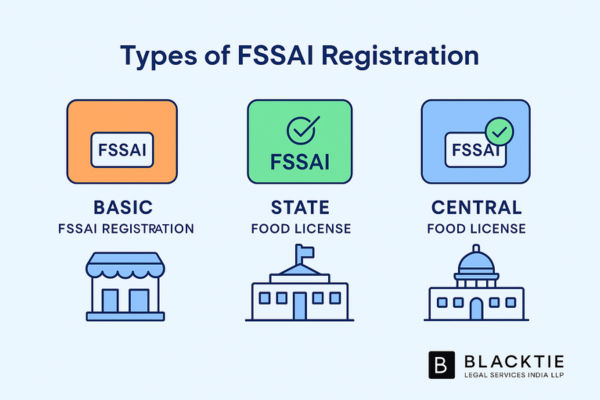
Under the Food License India system, every food business must register or obtain a license based on its size, turnover, and nature of operations. FSSAI has divided the licensing process into three main categories, ensuring that all types of food businesses—from small home kitchens to large industries—follow proper safety standards. Below are the three types of Food License India you need to understand:
1. Basic FSSAI Registration
Basic FSSAI Registration is the simplest form of registration under Food License India. It is meant for small food businesses whose annual turnover is up to ₹12 lakh. This includes home bakers, tiffin services, small food stalls, petty retailers, homemade food sellers, and small-scale food manufacturers.
Under this category, businesses receive a 14-digit FSSAI registration number, which must be printed on food packages or displayed at the place of business. The Basic Food License India ensures that small businesses operate legally while maintaining hygiene and safety during food handling.
2. State Food License
A State Food License is required for medium-sized food businesses under the Food License India rules. This license applies to businesses with an annual turnover between ₹12 lakh and ₹20 crore. It includes restaurants, medium-scale manufacturers, food transporters, distributors, storage units, dairy units, and processors operating within a single state.
The State Food License ensures that these businesses follow state-level food safety guidelines and comply with FSSAI standards. If your business operates in only one state but has a higher turnover or capacity, this is the right license under Food License India.
3. Central Food License
The Central Food License is the highest category under Food License India and is meant for large-scale food businesses. You need this license if your turnover exceeds ₹20 crore, or if your business operates in multiple states. It is also mandatory for importers, exporters, large manufacturers, government institutions, airport-based businesses, and large e-commerce food suppliers.
The Central Food License ensures stricter compliance with national food safety regulations. It is issued directly by the Central FSSAI Authority, making it essential for businesses dealing with high-volume food production or interstate operations.
Who Needs Food License in India?
Under the Food License India regulations, every business that handles food in any form—whether selling, storing, manufacturing, packaging, or distributing—must obtain an FSSAI registration or license before starting operations. The purpose of Food License India is to ensure that all businesses involved in the food supply chain maintain safety, hygiene, and quality standards.
Here is a complete list of businesses that must obtain a food license in India:
1. Cloud Kitchens
Online-only kitchens and home-based food delivery businesses must register under Food License India to operate legally on platforms like Swiggy and Zomato.
2. Restaurants & Cafés
All dine-in restaurants, cafes, bakeries, and fast-food outlets—small or large—require FSSAI licensing to ensure proper food handling and hygiene.
3. Food Trucks & Street Vendors
Mobile food sellers and food trucks must obtain at least Basic Registration under Food License India to avoid penalties and ensure compliance.
4. Dairy Units
Businesses involved in milk collection, processing, packaging, ice cream manufacturing, or dairy product distribution must obtain the appropriate Food License India category based on their production capacity.
5. Wholesalers & Distributors
Any business involved in bulk food supply, distribution, or storage must register under FSSAI, as they play a key role in the food supply chain.
6. Food Manufacturers
Companies manufacturing packaged foods, spices, snacks, beverages, oils, pickles, bakery items, or any processed food must obtain a State or Central Food License depending on their turnover and capacity.
7. Retailers & Grocery Stores
Supermarkets, kirana stores, online grocery sellers, and convenience stores all need Food License India compliance to legally sell food items.
8. Storage & Warehousing Units
Cold storage facilities, transporters, and warehouses handling food products must register under FSSAI.
9. E-commerce Food Sellers
Online platforms or individuals selling food through websites, apps, or social media pages must also obtain an FSSAI license under Food License India rules.
10. Importers & Exporters
Businesses involved in importing or exporting food products must have a Central Food License to operate legally at the national level.
Documents Required for Food License in India
To successfully apply for Food License India, every food business must submit specific documents that confirm the identity of the business owner, the location of the business, and the safety standards being followed. These documents help FSSAI verify that your business is genuine, hygienic, and eligible for registration or licensing.
Below is the complete list of documents required for Food License India:
1. Owner Identification Documents
These documents help verify the identity and address of the food business owner or authorized person:
- Aadhaar Card
- PAN Card
- Voter ID / Passport / Driving License
- Passport-size photographs
2. Business Registration Proof
Depending on the business type, you must submit:
- Registration Certificate (for companies or LLPs)
- Partnership Deed (for partnership firms)
- Shop Act License or Trade License
- GST Registration Certificate (if applicable)
These documents confirm that your business is legally registered under Indian laws.
3. Address Proof of Business Premises
To comply with Food License India rules, you must provide the exact location where your food activities are carried out:
- Electricity Bill / Water Bill
- Rent Agreement (if the place is rented)
- Property Tax Receipt or Ownership Papers (for owned premises)
4. Food Safety Management Plan (FSMS)
A simple handwritten or printed plan showing how you maintain hygiene and food safety.
This includes details on cleaning practices, handling, and storage procedures.
5. Layout Plan of the Food Unit
A basic sketch or floor plan of your kitchen, shop, warehouse, or manufacturing unit showing:
- Placement of equipment
- Workflow design
- Storage areas
This helps FSSAI assess whether your setup follows hygiene standards.
6. List of Food Products You Deal In
You must provide details of all food items you manufacture, store, or sell.
This ensures proper categorization under Food License India.
7. Proof of Business Premises Ownership or Use
- NOC from the owner (if rented)
- Letter of consent for shared kitchens or cloud kitchens
8. Additional Documents for Manufacturers (If Applicable)
If you are applying for State or Central Food License India, you may need:
- Machinery list with installed capacity
- Water testing report
- NOC from the Pollution Control Board
- Product testing reports (for packaged foods)
9. Importers/Exporters Documents
For import/export businesses applying under Central Food License India:
- Import Export Code (IEC Certificate)
- Declaration of food categories
Food License India Online Application Process (Step-by-Step)
Applying for Food License India has become much easier with the launch of the FoSCoS (Food Safety Compliance System) portal by FSSAI. The entire process—from registration to approval—can be completed online without visiting any government office. Below is a simple and complete step-by-step guide to help food businesses apply for Food License India smoothly.
Step 1: Visit the FoSCoS Portal
Begin the process by visiting the official FSSAI licensing website called FoSCoS. This portal manages all online applications for Food License India.
Here, you can choose whether you want Basic Registration, State License, or Central License, depending on your business turnover and category.
Step 2: Create Your User Account
To apply under Food License India, you must first create an account on the FoSCoS portal.
You will need to enter basic details such as:
- Name
- Email Address
- Mobile Number
- Password
After signing up, you will receive an OTP for verification.
Step 3: Choose Your Food Business Type
FoSCoS will ask you to select your exact business type, such as:
- Cloud kitchen
- Restaurant
- Food truck
- Manufacturer
- Distributor
- Retailer
- Warehouse
Selecting the correct category ensures that your Food License India application is processed accurately.
Step 4: Fill Out the Food License Application Form
Once the business type is selected, the portal will display the application form.
You must fill in details such as:
- Business Name
- Address of Premises
- Nature of Food Business
- Annual Turnover
- List of Products You Deal In
- Number of Employees
Make sure the information matches your documents to avoid rejection.
Step 5: Upload All Required Documents
To complete your Food License India application, upload all the supporting documents, such as:
- Owner ID proof
- Business registration proof
- Address proof
- Layout plan
- Food Safety Management Plan (FSMS)
- List of food products
All documents must be clear and readable.
Step 6: Pay the License or Registration Fee
After uploading the documents, you must pay the applicable fee online.
The fee varies depending on whether you are applying for:
- Basic FSSAI Registration
- State License
- Central License
Payment can be made via debit card, credit card, net banking, or UPI.
Step 7: Application Review & Inspection (If Required)
Once your Food License India application is submitted, the authorities will review your documents.
For State and Central Licenses, the FSSAI officer may visit your premises for inspection to check:
- Hygiene conditions
- Equipment layout
- Storage facilities
- Overall food safety standards
If everything is in order, your application moves to the approval stage.
Step 8: Final Approval and Issuance of Food License India
After successful verification, the authority issues your Food License India certificate.
You will receive a 14-digit FSSAI number, which must be:
- Printed on all food packaging
- Displayed at your business premises
Validity & Renewal Process for Food License India
Under the Food License India system, every FSSAI registration or license is issued for a specific period to ensure that food businesses continue to maintain proper hygiene and safety standards. The validity of a food license can be chosen at the time of application, and it plays an important role in keeping your business legally compliant.
Validity of Food License India (1 to 5 Years)
When applying for Food License India, businesses can choose the license validity period between 1 year to 5 years.
- Most small and medium food businesses prefer 1-year or 2-year licenses for convenience.
- Larger businesses often choose 5-year validity to avoid frequent renewals.
Regardless of the duration you choose, the license remains valid only until the final expiry date mentioned on the certificate.
Why Renewing Food License India on Time Is Important
Renewal is mandatory because operating with an expired license is considered a violation under the FSSAI Act.
If your Food License India expires and you continue your food business activities, you may face:
- Heavy penalties
- Late fees
- Suspension of operations
- Complete cancellation of your license
To avoid these issues, FSSAI advises renewing the license before the expiry date.
Step-by-Step Food License India Renewal Process
1. Visit the FoSCoS Portal
Go to the official FSSAI FoSCoS website where renewal applications are processed entirely online.
2. Log In to Your Registered Account
Use your existing credentials to access your Food License India dashboard.
3. Select the License You Want to Renew
Choose the active license from the list and click on “Apply for Renewal”.
4. Update or Confirm Business Details
Carefully check your business information, including:
- Premises address
- Product list
- Business turnover
- Contact details
If changes are required, update them before submission.
5. Upload Required Documents
Upload any documents requested by FSSAI, such as:
- Updated photographs
- Updated food product list
- FSMS plan (if required)
6. Pay the Renewal Fee
The renewal fee depends on the number of years you select (1 to 5 years).
Payment can be made online through cards, UPI, or net banking.
7. Inspection by Authorities (If Needed)
For State and Central Food License India renewals, an FSSAI officer may conduct an inspection to verify hygiene and compliance.
8. Receive the Renewed Food License
Once approved, your renewed Food License India certificate will be available for download on the FoSCoS portal. The new validity period will be clearly mentioned.
Late Fee for Delayed Renewal
If you apply for renewal after the expiry date, FSSAI charges ₹100 per day as a penalty until the application is submitted.
If you miss the renewal window entirely, you must apply for a new license.
Penalties for Not Having Food License in India
Under the Food License India regulations, operating any food business without a valid FSSAI registration or license is a serious legal violation. The Food Safety and Standards Authority of India (FSSAI) has strict rules to ensure that all food businesses follow proper hygiene and safety practices. If a business fails to obtain Food License India, it can face heavy penalties, fines, and even legal action.
Below are the major penalties and consequences you should be aware of:
1. Fine for Operating Without Food License
If a food business is found operating without a valid Food License India, the FSSAI can impose a penalty of up to ₹5 lakh.
This fine applies to:
- Restaurants
- Cloud kitchens
- Food trucks
- Manufacturers
- Wholesalers
- Retailers
Any food business operator (FBO) can be penalized for not having an FSSAI license.
2. Penalty for Selling Unsafe or Substandard Food
If a business sells unsafe, unhygienic, or misbranded food items without Food License India, the punishment includes:
- Fines ranging from ₹1 lakh to ₹10 lakh
- Cancellation of operations
- Possible imprisonment for serious violations
This rule ensures consumer safety and protects the public from food contamination.
3. Business Closure or License Cancellation
Authorities can shut down the business immediately if it is found operating without a mandatory Food License India.
For registered businesses, FSSAI can also cancel or suspend the existing license for non-compliance.
4. Penalty for Misleading or Wrong Labelling
If a business sells packaged food without the required FSSAI number or provides false labeling, it may face:
- A penalty of up to ₹3 lakh
- Seizure of food products
- Legal action under the FSSAI Act
This applies to all businesses dealing in packaged or processed foods.
5. Imprisonment for Serious Offenses
In extreme cases where unsafe food leads to consumer harm, illness, or health risks, the punishment can include:
- Imprisonment up to 6 months or more
- Heavy financial penalties
FSSAI takes such violations seriously to ensure zero compromise on consumer safety.
6. Penalty for Obstructing FSSAI Officers
If a business refuses inspection or hides information from FSSAI officials, the operator may face:
- A fine of up to ₹2 lakh
- Possible suspension of business activities
Why These Penalties Exist
The penalties under Food License India are designed to:
- Ensure food safety for consumers
- Promote hygiene standards
- Prevent food adulteration
- Maintain accountability in the food industry
These strict rules ensure that only safe, clean, and properly regulated food reaches the public.
Benefits of Getting Food License in India
Obtaining a food license is not just a legal requirement—it’s a powerful asset for any food business. Under the Food License India system, every food business must be registered or licensed to ensure consumer safety, quality standards, and operational credibility. Beyond compliance, an FSSAI license offers multiple long-term benefits that help your business grow, build trust, and expand across markets.
1. Builds Customer Trust and Credibility
Consumers are more likely to trust a business that displays an FSSAI license.
When customers see your Food License India number on packaging or at your premises, they feel confident that the food is clean, safe, and prepared under proper hygiene standards.
2. Enhances Brand Reputation and Marketing Value
A valid food license boosts your brand’s image.
It shows that your business follows national food safety standards, which improves your reputation in the market. Many customers actively prefer buying from licensed food businesses, making it a strong marketing advantage.
3. Ensures Legal Compliance and Avoids Penalties
Operating without a Food License India can lead to penalties of up to ₹5 lakh, business closures, and legal action.
Having an FSSAI license ensures you stay compliant with the law and avoid unnecessary fines or legal hurdles.
4. Helps in Business Expansion and Scaling
When your business has a valid FSSAI license, it becomes easier to:
- Open new branches
- Get partnerships and investors
- Register on food delivery apps
- Sell through supermarkets and online marketplaces
An FSSAI license is often a mandatory requirement for scaling operations across multiple locations.
5. Facilitates Export and Import Opportunities
For businesses looking to export food products, having a Central Food License India is essential.
It acts as an official document showing that your products meet international food safety standards, making global expansion smoother and more credible.
6. Improves Food Quality and Consumer Safety
The Food License India system encourages businesses to maintain:
- Proper hygiene
- Standardized food handling practices
- Quality control
- Regular safety checks
This results in better-quality food, healthier customers, and fewer risks of contamination or complaints.
7. Allows Use of FSSAI Logo on Packaging
With a valid license, you can display the FSSAI logo on your products.
This logo itself becomes a symbol of safety and quality, helping your products stand out in the competitive food market.
8. Helps Get Funding and Business Loans
Banks and financial institutions prefer lending to food businesses that have proper licensing.
A valid Food License India helps you secure business loans, funding, or investment without delays.
Common Mistakes to Avoid in Food License India Application
Applying for Food License India is a simple process, but even small mistakes can delay approval or lead to rejection. Many food business owners unknowingly make errors while filling out the form, uploading documents, or choosing the wrong license type. Avoiding these common mistakes makes your FSSAI registration faster, smoother, and hassle-free.
1. Submitting Incorrect or Incomplete Documents
One of the biggest reasons for application rejection is incorrect documentation.
Common issues include:
- Blurry or unclear ID proofs
- Missing business address proof
- Incorrect layout plan
- Not submitting the required FSMS plan
To avoid delays, always upload clear, updated, and valid documents as required under Food License India guidelines.
2. Choosing the Wrong License Category
Many businesses get confused between:
- Basic Registration
- State License
- Central License
Selecting the wrong category based on turnover or business type can lead to rejection.
For example:
- A business earning above ₹12 lakh but applying for Basic Registration
- An exporter applying for State License instead of Central License
Always check the Food License India eligibility criteria before applying.
3. Providing Incorrect Business Details
Small errors in business name, address, contact details, or product list can cause complications during inspection or approval.
Even spelling mistakes or mismatched information compared to your documents can create issues.
4. Not Renewing the License on Time
Many food business owners forget to renew their Food License India before it expires.
This leads to:
- Late fees
- Penalties
- Risk of business closure
- Need to apply for a new license
FSSAI charges ₹100 per day as a late fee, so timely renewal is crucial.
5. Ignoring Inspection Requirements
For State and Central licenses, authorities may conduct a physical inspection.
Some businesses fail to prepare their premises for this visit, leading to unnecessary compliance issues.
Ensure your kitchen, warehouse, or unit meets hygiene and safety standards before inspection.
6. Mismatching Information Across Documents
If your address on GST certificate differs from the address on your rent agreement or electricity bill, the Food License India application may be put on hold.
Always ensure uniform information across all documents.
7. Entering the Wrong Food Product List
Many applicants forget to list all the food products they manufacture, distribute, or sell.
This can cause compliance problems later, especially during inspection or renewal.
8. Uploading Low-Quality Images or Scanned Files
Blurry document photos, sideways PDF pages, or unreadable scans can cause rejection.
Upload clear files in proper formats to avoid delays.
9. Not Tracking Application Status on FoSCoS Portal
Some applicants submit their form but forget to track updates.
If FSSAI requests clarification or additional documents and you miss the update, your application may be rejected.
10. Taking Incorrect Advice or Using Unverified Agents
Some businesses rely on untrained agents or outdated information.
This leads to errors in the Food License India application, wrong document submissions, and unnecessary delays.
Always follow official FoSCoS guidelines or consult professionals.
How to Check Food License India Status Online
Checking your Food License India status online is a quick and simple process through the official FoSCoS (Food Safety Compliance System) portal. Whether you’ve applied for a new FSSAI registration or renewal, tracking the progress helps you stay updated and avoid delays. The FoSCoS portal provides real-time updates, so you can instantly see whether your application is under review, approved, or needs correction.
To check your Food License India application status online, follow these steps:
- Visit the FoSCoS Website
Go to the official FoSCoS portal where all food licensing services are available. - Click on “Track Application Status”
On the homepage, you will find the option to track your FSSAI registration or license. This feature is designed to help applicants get instant updates. - Enter Your Application Reference Number
When you applied for your Food License India, the system issued a 17-digit application reference number. Enter this number in the search box. - Submit and View Status
After clicking submit, you will see the exact status of your application—whether it is Pending, Under Inspection, Approved, or Sent Back for Clarification. - Respond Quickly if Any Action Is Needed
If the portal shows that the application has been returned for corrections, upload the required documents or provide the necessary information to avoid delays.
Tracking your Food License India status online ensures transparency and helps you stay compliant by completing every step on time. This small step keeps your food business legally safe and ready to operate without interruptions.
Difference Between Basic, State & Central Food License in India
Understanding the difference between the three types of licenses under Food License India helps food businesses apply for the correct category and stay compliant with FSSAI norms. Each license type depends on the size of the business, annual turnover, and the nature of operations. Choosing the right license ensures smooth approval and prevents legal issues.
Below is a simple comparison of Basic, State, and Central Food License in India:
Comparison Table: Basic vs State vs Central Food License India
| Category | Basic FSSAI Registration | State Food License | Central Food License |
| Who Needs It? | Small food businesses | Medium-sized food businesses | Large food businesses or those involved in import/export |
| Annual Turnover Limit | Up to ₹12 lakh | ₹12 lakh to ₹20 crore | Above ₹20 crore |
| Business Examples | Small retailers, homemade food sellers, small stalls, small tiffin services | Restaurants, medium food manufacturers, wholesalers, large retailers | Importers, exporters, e-commerce food sellers, big manufacturers, government projects |
| Issuing Authority | Local FSSAI authority | State FSSAI office | Central FSSAI authority |
| Inspection Requirement | Rarely required | Often required based on activity | Mandatory for most businesses |
| Cost of License | Lowest | Moderate | Higher compared to State license |
| Document Requirements | Basic KYC and business details | More detailed documents, layout plan, equipment list | Extensive documentation including export/import certificates |
| Who Should Apply? | Very small businesses or startups | Growing or established businesses | Large-scale operations with nationwide or global activities |
Summary
- Basic FSSAI Registration is suitable for small-scale food businesses.
- State Food License is for mid-sized businesses with higher capacity and turnover.
- Central Food License is required for large businesses operating at national or international levels.
This comparison makes it easier to choose the right license category under Food License India and avoid mistakes during the application process.
Who Issues the Food License in India?
The authority responsible for issuing Food License India is the Food Safety and Standards Authority of India (FSSAI). FSSAI is a government regulatory body that ensures all food businesses in the country follow proper safety, hygiene, and quality standards. The licensing process is carried out through designated officers at the Central, State, and local levels, depending on the size and type of the business.
Role of FSSAI
FSSAI sets the rules, guidelines, and standards that every food business must follow to operate legally in India. It supervises the entire food licensing system and ensures that food sold in the market is safe for consumption. FSSAI is responsible for:
- Framing food safety regulations
- Approving and issuing licenses
- Conducting inspections and audits
- Taking action against unsafe or non-compliant businesses
In short, FSSAI is the main body that governs the issuance and monitoring of Food License India to ensure transparency and food safety across the country.
Role of the Food Safety Commissioner
Each state and union territory has a Food Safety Commissioner, who oversees food licensing and enforcement within their region. The Commissioner ensures that:
- State-level licensing officers follow FSSAI guidelines
- Inspections are carried out properly
- Complaints and violations are handled efficiently
- State Food Laboratories coordinate with regulatory teams
The Commissioner plays a crucial role in the State and Central licensing processes and guides local authorities in issuing Food License India to food businesses based on their turnover and scale of operations.